Categories
Projects and Courses

My Nola, My Story

Dr. Shearon Roberts (Xavier University of Louisiana)

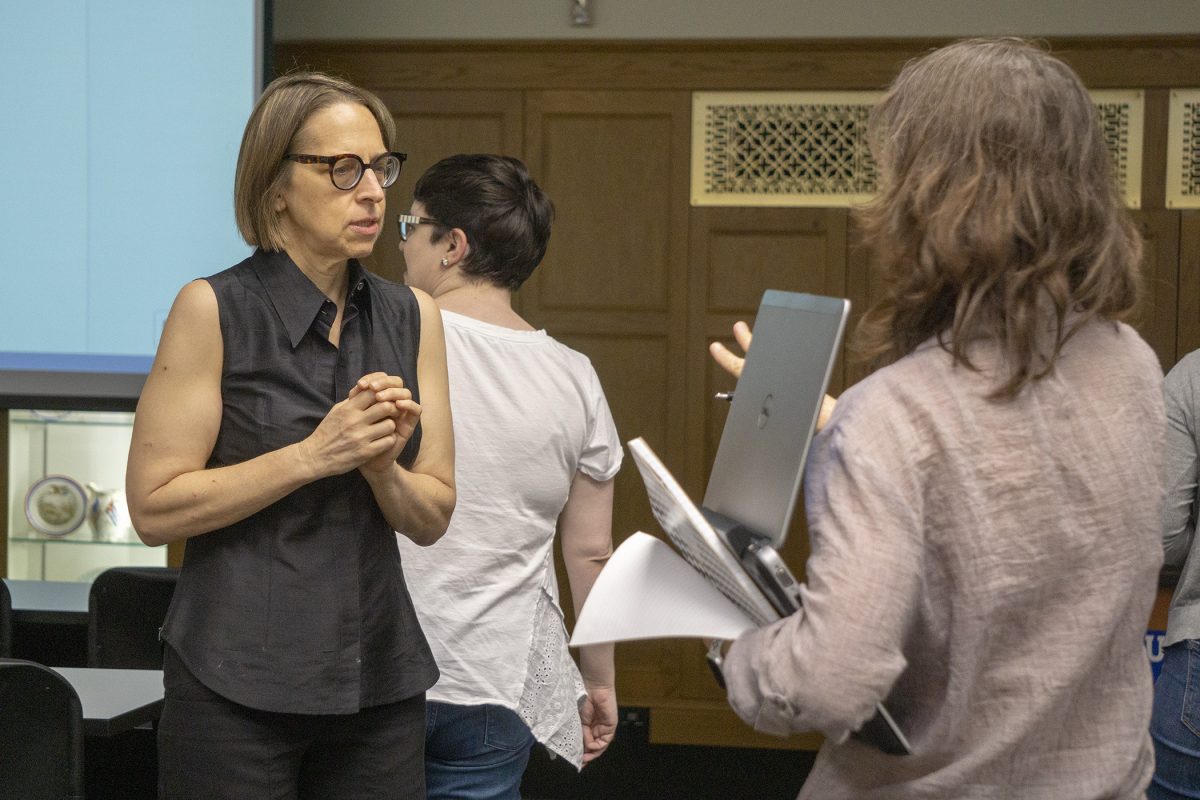
Shearon Roberts smiling

These stories reflect snapshots of lived experiences of communities of color who have called New Orleans home. It serves as a testament that they were here, are here, and shaped the fabric of this historic, cultural space.

Project Goals

To offer students opportunities for experiential learning as they record and share the stories of people of color in New Orleans.

Outcomes & Deliverables

A series of online exhibits and videos exploring aspects of history, identity, and culture, including the impact of Caribbean diasporic communities on New Orleans.

Resources

My Nola, My Story

Over 65 student-created exhibits, videos, podcasts, and other materials highlighting the lives of people of color in New Orleans.

Boswell’s: Home Away from Home

As one example of a student-produced work, this feature highlights Boswell’s Jamaican Grill and its owner, Boswell Atkinson.

StoryMap: New Orleans and LAC

This map-based exhibit explores relationships between New Orleans and peoples of Latin America and the Caribbean.

Categories
Tools and Topics

Collaborative Grant Seeking

Matching a project to the right funding opportunity can be a challenge. Finding the right partners and leveraging our strengths are crucial to successful proposals. University of Florida Grants Manager Bess de Farber and librarian Perry Collins co-led a webinar for institute participants.


Webinar

Resources

Funding for Libraries

Bess de Farber developed this guide, including funding opportunities of interest across libraries

Modern Endangered Archives Program

Based at UCLA, this Arcadia-funded program has supported several projects to digitize Caribbean collections

Institute proposal

Read the proposal for the institute, funded by the NEH Institutes for Advanced Topics in the Digital Humanities program.

Categories
Blog Posts Reflection

Reflection: Leah Rosenberg

Institute co-director Dr. Leah Rosenberg (Department of English, University of Florida) traces the development of the program from conception to fruition.


The seeds for the NEH institute were sown in 2012 by Professor Rhonda Cobham-Sander when she suggested that we design and teach a course—across multiple campuses—dLOC would support and that would center on materials in dLOC. Faculty and librarians at the University of West Indies (Cave Hill), Amherst College, the University of Miami, and the University of Florida collaboratively designed and taught  Panama Silver, Asian Gold, Migration, Money, and the Making of the Modern Caribbean, a course designed to enhance and bring visibility to dLOC’s collections on post-emancipation migration in the Caribbean. The experience felt like a first step in building a community of scholars, librarians, and students in Caribbean studies and digital humanities. 

To build this community, we organized two panels on teaching with Caribbean digital libraries at the West Indian Literature Conference in 2016; there we discussed needs and priorities for Caribbean studies scholars engaged in DH. Audience members asked for a NEH institute. In the following year, we built on these discussions by organizing “Collaborating Across the Divide: Digital Humanities and the Caribbean,” a conference to bring together scholars and artists from the Caribbean and the United States to discuss how to collaborate through digital humanities in ways that decolonize knowledge and empower Caribbean subjects. Participants, again, suggested an NEH institute and by this time we had accumulated the necessary experience and support to undertake the much larger project of organizing an NEH summer institute. We had started with two of us, Rhonda and I at a hotel restaurant by the sea in Guadeloupe; the course involved six organizers; the roundtables seven; the conference had 11 speakers; the Institute would have over forty participants and presenters. For me, the first satisfaction and surprise of the institute was reading the applications. We had over 100 applications and all were highly qualified, involved in innovative and high-quality digital humanities work in Caribbean studies and they were working all over the country and indeed the world.  The community was so much larger than we had imagined.

Categories
Blog Posts Reflection

Reflection: Laurie Taylor and Hélène Huet

Institute co-directors Dr. Laurie Taylor and Dr. Hélène Huet (University of Florida Libraries) share on their role in designing and planning the institute and its impacts.


Our involvement in planning and co-leading the NEH Digital Humanities Institute draws on a wealth of existing collaborative experience and deeply shared goals. All three of us are passionate about supporting our home communities, which include among others Caribbean literary, Digital Humanities, and library professionals. The NEH Institute grew out of our collaborations and work in Caribbean Studies. For example: 

  • Laurie started with dLOC over a decade ago as the Technical Director, moving into the Digital Scholarship Director role specifically to build on dLOC’s existing infrastructure and collections, to enable new ways of researching and teaching in the digital age. 
  • Hélène, as Chair of and the Florida Digital Institute Consortium (FLDH), has worked on highlighting the various digital projects done in the state of Florida, such as dLOC, both on the FLDH website or via conferences and recorded webinars.
  • Institute co-director Dr. Leah Rosenberg has led library collaborations for Caribbean Studies, including serving on the Digital Library of the Caribbean (dLOC) Scholarly Advisory Board for over a decade.  
Hélène Huet (left) and Laurie Taylor (right) at podium

Through our various collaborations with different groups of people over the years, the most common requests for help we heard were: 

  • Finding specific items for digitization 
    • Often resulting in items being found and digitized; and often a bit of community building, with recommendations to contact another or a couple of others who are working on the same period, author, place.
  • Receiving training and technical assistance
    • dLOC’s technical team supports partners in digitization and digital curation technical needs, but we previously had an adhoc response to training, with webinars and one-off sessions, sometimes embedded in particular projects or events

In addition, people often shared with us how much they’d love  to have an in-person institute that would bring together scholarly, teaching, and library (and archives and all collections) expertise, focusing on the Caribbean and Digital Humanities.

Thus, we decided to design the Institute based on the grounded discussions with collaborators on what they saw as being needed, and on what we knew matched their needs in terms of technologies for teaching and research. We also wanted to make sure that the technologies we introduced would be available and usable by everyone, no matter where they lived or which institution they worked at, which means we focused on free, stable, useful technologies with productive applications to teaching and research. 

We expected a good level of interest, and that we would be able to find 26 participants as planned, even though the Institute was in Gainesville, Florida–also known as the Swamp–in the summer, with dorm accommodations and without the conveniences of a city. Surprisingly, we received over 100 applications and were overwhelmed by seeing the  fantastic work by so many people, some who are long connected and some who were new to us.

During the Institute, the engagement was incredible. We learned from and with so many amazing people. Our collective learning spanned specific applications (e.g., technologies, classes, assignments) and broad understanding of how we can best support our work together as a community of practice, to undertake changed work for individual and community good. We have read the participant reflections with joy and appreciation. We give thanks to the wonderful teams of folks supporting and taking part in dLOC and the Institute. Thanks to all for great work, and we are excited to see the things to come!

Categories
Projects and Courses

Kamau at 90

Dr. Aaron Kamugisha (University of the West Indies at Cave Hill, Barbados)

Aaron Kamugisha applauding for presenter

Given the challenges for learning and online instruction during the pandemic, the course took a more traditional format focused on the lifework of Barbadian poet Kamau Brathwaite, who passed away early in the semester.

Resources

Course poster

Dr. Kamugisha’s course focused on Brathwaite’s lifework alongside other writing and criticism

Kamau Brathwaite at the Poetry Foundation

Brathwaite published over 10 poetry collections, including poems such as “Bermudas” and “Bread.”

Brathwaite on PennSound

A selection of audio recordings of Brathwaite’s readings of his work.

Categories
Blog Posts Reflection

Reflection: Juliet Glenn-Callender

Juliet Glenn-Callender (Campus Librarian, University of The Bahamas-North) shares how she incorporated minimal computing techniques she learned into a digital course project after Hurricane Dorian.


I was encouraged to attend the NEH Caribbean Studies and Digital Humanities Institute by my coworker Dr. Sally Everson of the University of The Bahamas English Department. I was working with her to provide guidance in describing the artifacts and information, that students of the ENGLISH 119 and 120 classes had collected about historical sites and events in Grand Bahama. The goal of the project was to collect stories and images that were not documented before. The students would learn how to do research and describe the items that they had collected. We would provide technical support to put items on a platform that could be easily accessed by the class initially. 

Attendance at the NEH Institute assisted me in gaining valuable skills that were needed in order to create small scale digital projects that could be used within the University. The project that Dr. Everson and myself had proposed to work on fell through as a result of Hurricane Dorian which destroyed our campus in September of 2019. However, having gone through the workshops and materials that were provided and in an effort to utilize the skills and knowledge gained, I decided to propose a small Digital Humanities assignment to be completed by the students of Academic Enhancement History – Topics in 20th Century History of the University of The Bahamas. I taught students in the Spring semester and would teach them again in the Fall, so I took the opportunity to create an assignment that would be more engaging for students at the College Prep level.

The objective of this assignment entitled The Road to Majority Rule in Bahamas (1942-1967) and Independence in The Bahamas is to explore the significant events in Bahamian history leading up and emanating from Majority Rule and culminating in the country achieving its Independence in 1973.

Students would make a narrative map using StoryMap JS to create a story of the series of the events with a slide and a short narrative describing the following:

  • Process/summary
  • Effects/outcomes

The key events to be explored would be given and some resources supplied for students to utilize in their presentations. The rest of the resources would be sourced through their research efforts.

The goal of the assignment would be to create an activity that students would, not only learn about their history, but also put into a format that they could be easily accessed by others. It would be suitable for use by high school seniors.

The Timeline created would be made accessible through a LibGuide for HIST013 which would be created for the class projects and course resources.

The assignment would also allow students to interface with the technology for capturing information digitally. They would learn how to research, document, and make information available to the wider community.  

I enjoyed this workshop as it highlighted that in many cases, there was no need for sophisticated equipment to capture items digitally.  As a librarian, I had worked on digital projects before, but this Institute really brought home the concept of minimal computing in terms of doing work with the University community and the wider community. It also, highlighted resources that were either free or at minimal cost and with minimal training that could be used to capture digital data and make it accessible to users. If this institute is offered, I would definitely participate again. This is especially so, as I am now teaching a course that I can explore the realm of the digital humanities.
Categories
Projects and Courses

Decolonizing Haitian Studies through Digital Scholarship

Natasha Joseph (Howard University, formerly University of Florida)


What is most special about digital humanities is the ability to reach people and areas that may not have had access to certain academic works and help to broaden the scope of research as well as magnify the voices of marginalized populations.

Project Goals

In her presentation, Natasha calls for new Haitian narratives that decolonize research. She examines who Haitian women are, including what trials, tribulations, successes, failures, and obstacles hinder their progress as agents of environmental change.

Resources

Natasha’s Presentation

Watch the full video recording of “Decolonizing Research and Shifting the Narrative of Haitian Scholarship Through Digital Humanities”

Presentation slides

Download slides in PDF or PPT formats

Categories
Projects and Courses

Dutch Caribbean Digital Platform

Dr. Margo Groenewoud (University of Curaçao)

Margo Groenewoud presenting at the institute.

This digital repository includes unrestricted and restricted materials from special collections such as the Dutch Heritage Collection, as well as collections from the University of Curaçao and partner institutions.

Project Goals

  • Develop a research program based on the playlist pedagogy concept that uses Zikinzá collection materials available in the Dutch Caribbean Digital Platform
  • Improve Zikinzá collection metadata to increase accessibility and use
  • Encourage more use of the Zikinzá collection in educational settings

Outcomes & Deliverables

The research program will bring local sources into the classroom to increase historical awareness and decolonize education. Students will learn to contextualize and build critical thinking skills through discussions about engaging with playlist recordings.

Resources

Dutch Caribbean Digital Platform

Access the DCDP to search and view collections.

Playlist Pedagogy

Margo’s presentation about incorporating auditory playlists into educational settings with an example from the DCDP collections.

The Cult of Pedagogy Podcast

Read the transcript from the podcast’s 50th episode: Using Playlists to Differentiate Instruction.

Zikinzá Collection

Search this collection in the DCDP for songs, music, and stories about life on Bonaire and Curaçao.

Example Recording

Listen to this MP3 song recording from the Zikinzá Collection.

Categories
Projects and Courses

Language & the Caribbean

Molly Hamm-Rodríguez (University of Colorado Boulder)

Molly Hamm-Rodríguez and Nadjah Ríos Villarini in conversation at the May 2019 institute

Framing language as a central site of social action, students will consider both the ideological formations that influence language policies and practices as well as the interactional perspectives that illustrate how language (de)constructs relational identities and social worlds, in the Caribbean and its diasporas.

Course Goals

  • Use sociolinguistic, sociocultural, and linguistic anthropological perspectives to explore language variation and use across the Caribbean and its diasporas.
  • Students study the dynamic nature of language within historical and contemporary processes
  • Challenge colonial origins of linguistic and geographic fragmentation by centering linguistic diversity

Students use diverse theoretical approaches to explore language variation in the Caribbean and Caribbean diasporas through a decolonizing perspective.

Outcomes & Deliverables

Reading responses that critically engage course topics, multimodal keyword definitions, genre study, speech communities digital presentation

Resources

Molly’s Course Syllabus

Find more information about Hamm-Rodríguez’s “Language & the Caribbean” course. (Shared under a CC BY-NC 4.0 license.)

Black Lives Will Not Matter Until Our Languages Also Matter

As part of the course, students are assigned this video lecture from Dr. Michel DeGraff, linguistics professor and director of the MIT-Haiti Initiative.

Categories
Projects and Courses

Digital Mapping Project & Presentation

Dr. Takkara Brunson (California State University, Fresno)


Students will generate their own topic on Black/African experiences on the continent or in the diaspora, and map major locations using StoryMaps.

Project Goals

  • Develop an original research project on Black/African experience on the continent or in the diaspora, focusing on issues of religion, gender, ethnic identity, precolonial or post-colonial society, politics music, or the visual arts
  • Map at least 7 locations related to the topic using StoryMaps
  • Make an argument about the topic to support the thesis
  • Make a traditional oral presentation of topic
  • Create a poster presentation of the map showing how it supports the thesis

Students draw on major themes from the course African Cultural Perspectives to identify and map the major issues, sites, and topics which speak to their own interests and thesis. The project incorporates StoryMap JS, allowing students to not only create a textual description of their topic, but visualize it by mapping the major locations and events which provide cultural context.

Outcomes & Deliverables

As the final project, students will create a StoryMap with a minimum of 7 locations, a poster which displays the map along with relevant descriptions and information, and share these products through a traditional oral presentation.

Resources

Digital Mapping Assignment

Read the full assignment description from Dr. Brunson’s African Cultural Perspectives course

Mapping & Timelines

Explore more digital mapping tools that can facilitate student creation of visual projects

Institute Reflection

Dr. Brunson summarizes her experience at the institute

css.php